Posted on Leave a comment

How to get started on the sharemarket when you know nothing

I started on the sharemarket when I was 20 years old. I had $2000 I’d put away for a rainy day, money I earned when I worked full time and was yet to go to university. I asked my Dad for some recommendations – he suggested I buy in iron ore and an engineering firm. Both were volatile, but had the potential to deliver major returns.

Unfortunately, neither share delivered and I lost a small amount of money when they stopped trading on the sharemarket.

However – nothing ventured, nothing gained. It was my first taste into creating passive income and a good learning curve. If you have the desire to get started, here are my tips.

Save some money and find a stockbroker

A little goes a long way. $100 per fortnightly pay yields $2600 in a year, which is more than enough to have your first attempt at trading. Good ‘ole Doctor Google can also put you in touch with stockbrokers. They charge small amounts to buy and sell shares in your portfolio.

Find something you are interested in.

For me, I am super interested in education, medicine, psychology, and oddly, airlines. I read a lot about different airlines; their safety records, the airlines that perform versus the ones that don’t, whether an airline has gone bust and why? I read a lot about Ansett and Qantas, just purely out of interest.

Find a share that relates to that interest and check on it daily.

Because of this niche interest in airlines, I started researching airlines on the stock market. Every day, I would type
ASX: QAN into Google. I pressed ‘max’ to see how high the share had traded in its history, and also to get a sense on the price of the share right now versus its potential peaks.

Buy low

I did not buy Qantas shares as soon as I became interested in them. I watched and waited. When Covid-19 hit its worst period and we went into a lengthy lockdown, the shares that usually traded at about $5 or more per share, suddenly dipped to $3.61 per share. Because I was more experienced, I had $10,000 in the bank and spent that whole amount of shares.

Sell high!

Keep watching the share daily. When it hits a reasonable price and you will make money, sell!

There is obviously a lot more to it than this, but this is a good way to get started.

1,386 Money Paper Plane Stock Photos, Pictures & Royalty-Free Images -  iStock
Weeeeeeeeeeeeeeeee

Posted on Leave a comment

My research question

I have finally finished my 3700 word literature review. I have reviewed the research thoroughly and now have a question, as well as firm reasons for exploring it. Here’s what I came up with…

The situation around LGB teachers and their experiences presents a lack of equality. There is a gap in the literature, with minimal research focusing primarily on lesbian primary school teachers in Australia. The direction of this research project will investigate the lived experiences of lesbian-identifying primary school teachers. The objective of this study will be to explore the lived experiences of these teachers to determine the extent to which they choose to be visible (or not), their reasons underpinning this, what (if any) identity management strategies they use and why, including to better appreciate if there are any differences in experiences between public schools and private schools. As such, the research question that will guide this work is as follows: What are the lived experiences of lesbian-identifying primary school teachers, and what school-environment factors influence these? It is hoped that by adding to the knowledge base, more awareness will be formed, and anti-homophobic policies and affirmations will become more widespread.

Rainbow Pride Flag Background LGBTQI Rights Grunge Paper Striped Colorful Pattern Abstract Concrete Paper Red Orange Yellow Green Blue Purple Texture stock photo
Posted on 1 Comment

My masters project – We’re here, we’re queer, and we’re going to become teachers.

I have recently started preparing for my masters project, which I am intending to start next year. I am currently doing a literature review around my researchable problem.

coffee latte near white wireless keyboard and Apple EarPods on the table photography

I first became interested in the identity issues around gay and lesbian teachers in 2013. I was in my final year of university. At the time, Bernard Gaynor stated that parents should have a right to ensure their children are not taught by gay teachers. I wrote an article at the time that went quite viral, and was published in MX Newspaper.

I became more interested in this researchable problem when I gained a teaching job in a Christian school. I noticed that I needed to be closeted, but teachers with other so-called ‘sins’ in their lives were allowed to freely flaunt them – such as living with their boyfriend or getting a divorce.

I lived in fear every day that someone would find out and I would lose my job, or be forced to work in a very hostile environment, all because of my relationship status.

I think the way that gay teachers are treated in the teaching profession is largely problematic.

People expect teachers to be the high watermark of morality. Married with children, no drinking, no swearing, no partying. No outward political opinions. After all, we are role models.

However, I am concerned with the fact that if a gay teacher is encouraged to be closeted, what message does this send to young gay and lesbian students? Or students who have gay parents? Or even heterosexual students?

It sends the message that who we are is shameful and wrong.

Therefore, my masters project is going to centre around exploring the lived experiences of lesbian teachers within the primary setting in Queensland. I am going to use ethnographical, semi-structured interviews to gain insight into whether lesbian teachers are out in their environments, how they form (or do not form) authentic relationships within their communities, and the reasoning behind their being out or closeted.

In my last year of high school, I was lucky enough to have an out, lesbian teacher. The administration of the school made it incredibly difficult for her, and they made it difficult for me too. The way I viewed that teacher changed the way I viewed myself. Here was a very normal, successful woman with a long term relationship, dogs, and a mortgage.

That was all I really wanted – was to be normal. To have a life like everyone else. A white picket fence, a wife, a child, higher education, and a job I enjoyed. I wanted a happy home. Through viewing this teacher as a role model, I came to understand that this would be possible for me.

This is why this research is absolutely essential and I can’t wait to continue sharing it with you all.

Posted on Leave a comment

When people raise imaginary children

If you have no children, you are free to judge parents, but your opinion means nothing.

When I was completing my education degree, I was given an online login to raise a virtual child. I named her Lucy and responded to various parenting scenarios to produce an end result.

Virtual child

I did a good job. Lucy was well-adjusted, secure, and intelligent.

But I remember thinking – this is not real life. The various pathways to raising secure children are much more fraught with difficulty. They are many and varied, uncertain at times. They are far less linear in real life.

I’ve certainly fallen into the trap of judging parents. I am not innocent by any stretch. I even judged certain parenting styles before having children. Now, I look at certain things other parents do, and think, I would not do that myself. But now I have one of my own, I have a lot more empathy for the daily battles of other parents.

Since having a child of my own, the majority of parental judgment has come from people WITHOUT children.

People who are raising good little virtual children in their mind’s eye.  

People who are not living in the real world. You know the kind – they think that anyone less than perfect shouldn’t have children.

Overweight, mentally ill, career-driven, single, young, or less financially secure individuals. Parents who enjoy a drink. They all fall below the imaginary gold standard of parenthood.

Before I had a child myself, I thought I would do everything that is best for my child, no questions asked, and I did judge those I perceived as doing less than the best. I thought I would sooner live off baked beans than see my child go without something.

After all, we had longed for this child for so long.

I planned to stay home for three years. I hoped to breastfeed until toddlerhood. I didn’t want to smack my child. I thought I would be able to live without medications, lest it come through the breastmilk. My child would not have too much TV or too much sugar, or too many clothes.

But that, my friends, is raising a virtual child. That is not real life.

The first to fall off were the breastfeeding wheels. We had a rough start to building up my milk supply because of the severe blood loss I had at birth. We had to set timers and breastfeed him every two hours, then pump, formula feed, put him to sleep, then do it all again two hours later.

It was BLOODY HARD! I didn’t give up, but he did have some formula in those early days. He grew so well and was in the top percentile for height and weight.

At five months, though, I was losing my mind in other ways. I had few Mum friends, was hating playgroup, and I was lonely. When the day care centre opened up next door, we put him in one day a week while I did some paid work.

Far from being detrimental, it has helped his development immensely. I can’t thank his teachers enough. I didn’t last the three years, but he is securely attached and resilient.

At six months, I had a crisis and commenced anti-psychotic medication which I believe saved my life. My milk supply dried up, until I saw a private psychiatrist, who got us started again with an appropriate breastfeeding anti-psychotic.

I felt the sting of judgment from people who had never suffered mental disorders, who all thought I should not be breastfeeding while on medications.

Yet, he coped just fine with no withdrawal – and a medical doctor had approved it.

At nine months, he started biting. No more breastfeeding. I couldn’t deal with the pain, even though I knew breastfeeding was a good thing. During one of his bites, I instinctively gave him a smack on the arm. He bawled his eyes out. Oops. I felt terrible but it was an involuntary reaction.

I had other moments of poor judgment which left me questioning myself as a parent.

As for the TV, sugar, and too many clothes? Let’s just say he lives a charmed life… but he is no worse off for any of these things. He is clever, secure, and thriving.

And he loves The Wiggles.

Unless you’re in the trenches with us, it’s best to reserve judgment. Until you’re raising real life humans, you don’t know how you’ll respond to the challenges. Parenting humbles you in ways that no other life experience really can.

And sometimes?

It is actually best to put yourself first, lest you end up a burnt out, bitter, resentful parent – which is way worse for a child than being a little selfish on occasion.

Posted on Leave a comment

Bipolar One Cheat Sheet

Bipolar is one of those mental illnesses that gets thrown around into discussions about people we don’t like.

You know, the colleague who is in a bad mood, or the ex who snapped in anger a couple of times. However, Bipolar One is much more complex and discrete than just being a bit moody.

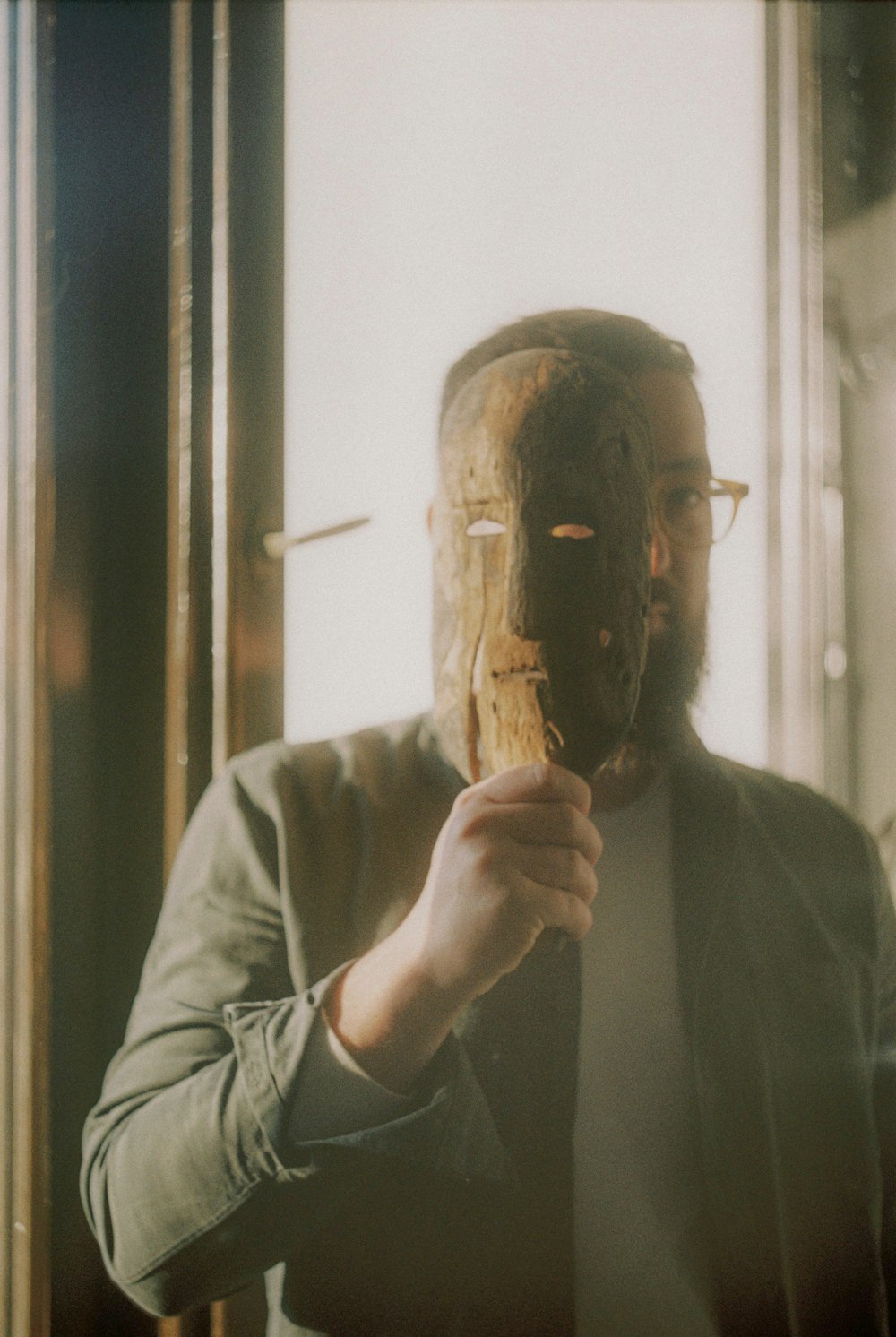
man in gray long sleeve shirt holding brown wooden stick

So what is it?

In order to be diagnosed Bipolar One, a person needs to have a manic episode.

What’s a manic episode?

Far from being just a bit strung out, a manic episode is a period of a week or longer of unusually elevated or irritable mood.

During a manic episode, a person may be very talkative, have inflated self esteem, decreased need for sleep, and flight of ideas. Risk taking behaviour may also be present, including risky investments, impulsive purchases, sexual misadventure, gambling, or otherwise risky behaviour with high consequences.

So imagine your bubbly type-A individual, going from here to there and kicking goals with little need for sleep – until the manic episode progresses to a more disorganised state…

Or – in some cases – the destructive type who is cash-happy and speeds along the highway with no thought for consequences.

A manic episode may also have psychotic features – which may include seeing and hearing things, delusions (false beliefs – for example, the belief they are being watched), paranoia, and anxiety.

Some of these psychotic features may go so far as to have an affected individual believe that there is a conspiracy with the federal police watching the house, ready to destroy them with evidence of a crime they aren’t actually sure they committed.

red blue and yellow abstract painting

Many people suffering their first manic episode will be hospitalised – a person with Bipolar is around 15 times more likely to commit suicide than the general population and this risk is heightened in manic states, due to impulsivity. The likelihood of a psychotic episode also increases, the longer the mania is untreated.

Because mania can be such a heightened, productive state, a person at the stage of needing hospitalisation is likely to resist, resist, resist. When this happens, they may be held in a facility against their will – also known as being kept under the Mental Health Act.

A person suffering a manic episode may also be irritable, rather than heightened. They may also display a lot of goal-directed behaviour (completing tasks, unrealistic plans of tasks to be done, cleaning the house.)

As opposed to the “moody” stereotype of Bipolar, someone who is experiencing mania may appear high functioning, productive, and driven. However, as mania progresses, the lack of sleep and other symptoms can cause disorganisation and impaired functioning in all areas of life – which is required for a diagnosis.

A person with Bipolar One may also suffer a depressive episode. However, it isn’t required for a diagnosis. Depressive episodes can be characterised by a lack of energy and interest, sleep problems, thoughts of death, weight loss or gain, and diminished ability to concentrate.

Bipolar One is observed in males and females equally in most prevalence estimates. Interestingly, Bipolar is more common in high income countries and more common in separated, divorced, or widowed individuals, but the association is not clear in studies completed thus far.

Far from being an illness that can be cured with positive thoughts or yoga, Bipolar is largely biologically rooted. There is a 10-fold increased risk for a person to develop Bipolar if it is somewhere in the family. This risk increases depending on the degree of kinship of the individual to the family member with Bipolar. It can also be contributed to by stressful life events and trauma.

Treatment of Bipolar typically involves some form of medication, teamed with therapy. Medication is often an antipsychotic or anti convulsant, along with a mood stabilising medication. Psychoeducational therapies such as dialectical behaviour therapy, cognitive behaviour therapy, interpersonal and social therapy may be used.

But it’s not all bad.

Many people with Bipolar One do recover with the right treatments, even though it is likely to affect job performance at some stage. Working within mood episodes also presents significant challenges. Career and job changes are common with Bipolar One, however, the diagnosis of Bipolar One isn’t a death sentence, once it has been stabilised.

Moods in Bipolar are often to the extreme. For the person suffering this disorder, it can be an endless fight to find the middle ground, rather than existing on either exhausting side of the thermometer.

Posted on Leave a comment

I am here to live out loud.

Earlier this year, I completed neuropsychological testing, referred by my psychiatrist. She wanted more insight about how my mind worked and organised ideas, so I completed the testing. A lot of it was puzzles, some of it was vocabulary, and I had to draw a clock showing a specific time. I failed at that task, drawing the numbers outside the clock face. I lost points.

“You do realise you have ADHD, right? And that’s not a pejorative.”

Unbeknownst to my treating doctor, I had actually been diagnosed by a paediatrician in 2001, aged 11. This was due to my impulsiveness and poor behaviour, as well as my disorganisation. At the time, I had been prescribed dextroamphetamine. I was on it for only a short time as my parents didn’t believe I had ADHD. It made me kind of spacey, but it kept me on track.

As an adult, I couldn’t imagine how I could have ADHD. I thrive in my studies and my work. I finish my assignments early and I get good grades, even in the face of multiple obstacles.

But I do get distracted.

So how do I cope?

I start everything early. If I have 60 days to complete a 4500 word assignment, I divide the number of words by the number of days and become micro-productive. It usually ends up being about 100 words per day and I can finish on time. When I’m in my flow state, I keep writing. That’s how I manage to finish early, most of the time.

So where do I feel it the most?

I am impulsive. I have racing thoughts and ideas. The fact that I took on a masters degree with a full time job was a complete whim, and one that I have managed to stick with.

I fidget. I constantly crack my knuckles, move my legs, and fiddle with my phone.

I am disorganised. As a specialist teacher, I move from classroom to classroom throughout the day. By the end of the day, my coat, instruments, hat, lunchbox, and water bottle are in all different places. This is how I managed to lose a box of LEGO when I was a learning support teacher, at 30 weeks pregnant.

I get distracted a lot. One assignment is usually full of many hours of looking at memes and true crime documentaries, as a side road to actually getting stuff done.

As a teacher, I often hear ADHD used as a pejorative to describe children who are not a ‘good fit’ for the classroom environment. However, I would urge people to give these children time. As an adult, my ADHD is my greatest strength. My impulsivity has forced me to make beneficial decisions for myself. My stubborn commitment to tasks sees me through to the end, though I do get distracted a lot.

Many so called pathologies have huge benefits when they are channelled in the right way. For some, this means medication. For others, it means finding ways to compensate.

Posted on 1 Comment

The first coffee after birth

At the very least, I had shed the skin of not wanting to disclose my birthing story by going to the Mum’s group. Before Soren and while we had been saving for IVF and world travels, Natalie and I had been living on a shoestring budget. As an adult, my love for iced takeaway coffee drinks had evolved a full-blown daily caffeine addiction. Because we were saving our pennies, we limited ourselves to two weekend dine-in coffees and one on every Wednesday morning. We often conversed about what our life would be like after having a baby, full of idealism about bringing the babe along for our mid-week dates. We certainly had high expectations.

After spending my teenage life as an outsider, I had become rather deliberate about surrounding our budding family with good and accepting people. We’d set up house in the inner-city and made a lot of equally coffee-addicted friends with whom we’d become quite familiar. Some were friendly acquaintances, baristas, and some we considered our inner-circle. Our coffee people watched my belly grow in anticipation, getting to know us over our coffee orders.

The first coffee morning after the birth, Natalie sent me into our favourite café to get our usual orders. I clammed up in a way that I couldn’t grasp at the time.

“It’s just two lattes. Don’t order yours on skim milk, I don’t want to end up drinking yours.”

“It’s… It’s too much for me to remember, Natalie. You go in.”

Natalie took the hard line with me, which I needed, but hated it at the time.

“Just go in and order it, you look fine, you’ll be fine!”

I wasn’t really afraid of screwing up the order. This was the first time I’d been seen since the birth. What I was really afraid of was being asked how the birth went. I didn’t want to explain it. I didn’t want pity. I just wanted to lick the wound silently with my takeaway coffee cup at home.

But I relented. I ordered the coffees, and nobody asked so I didn’t tell.

Posted on Leave a comment

Of Love and IVF

It’s always funny when you hear people trying to quantify motherhood. Everyone always knows who would make the best kind of parent, and who definitely should not procreate. Most people agreed that abusive, negligent people shouldn’t be parents, but a lot of people also feel that some women just weren’t maternal enough.

Despite all the progression that has been made by feminists, there still exists a certain mould that would-be Mums need to fit into.

For instance, if you’re career-driven and well-travelled with a lot of care for your financial status, then you’re considered to be far less maternal than the barefoot-and-pregnant girls who grew up playing house with Barbie dolls – the type of women who married their high-school sweethearts and spent all of their child’s formative years at home, making perfect crafts and perfect home recycling systems for their Instagram feeds. Such people also often seemed to be born with the perfect body for childbearing, bringing their infants into the world effortlessly in expensive private hospitals without a ton of interventions.

If you’re a gay parent, you are definitely seen to be further outside of the Mummy-mould because you have to create a family in a way that some would consider to be scientific and clinical, rather than as an act of physical love, which has been built up as the high-watermark of “normal” motherhood. It’s all about love, after all.

I was definitely never the Barbie-child, and I put off having children in my early 20s because I chased career goals and stability. As an intellectual who didn’t much like hugs, I often feared that people would see me as some kind of rigid, refrigerator parent who couldn’t put my textbooks down long enough to attend to my child.

With all that being said, my son, Soren Harry Forrester Miles, is my entire world. I know that everyone thinks their progeny is the most beautiful thing to ever grace the Earth, but I honestly believe it’s true. He is perfect. Although he is an IVF baby, I didn’t spend years trying or squander tens of thousands to get him. He was a first-time fluke.

“This first cycle is purely diagnostic,” the nurse had explained.

“It’ll give us a better picture of your hormones so we can get closer to success. After all, the embryo grade is BC – it didn’t divide quickly, so it’s unlikely to implant. This is all par for the course.”

I remember asking if that meant it was a poor-quality baby. I meant a baby born with sickness or challenges, but it came out in poor taste.

“Oh, no!” She laughed.

“It just means you won’t get pregnant first go. Your baby will be as bright as any other.”

Thank God.

Like any parent, I wanted my child to have the best chance of a full life. Because I was a worrier by nature, I ruminated about all the things that could go wrong. Even though my child didn’t exist then, I still wanted them to have the best start I could give.

With our low chances in mind, we planned a wedding, I wrote a children’s book, and we both signed up for masters degrees. The night of the embryo transfer, I released my book and sat up all night with pizza and my laptop, filling over a hundred book orders when I was really supposed to be feet up with Valium and a nice, cold glass of water.

The next day, we took a flight to Cairns for a much-needed holiday and to keep our mind off the two week wait. We stayed in a cheap Air BnB and I lay in the backseat of one of my best friend’s 4X4s, inserting vaginal pessaries and taking in the rainforest surroundings.

Ah, the serenity.

Just a few years prior, we had started the whole IVF process. Full of artificial hormones, laid back and had my eggs extracted. Six, in total.

Making an IVF baby was hardly an experience in love.

In the week following this process, my six eggs sat in dishes with donor sperm. I had to call the clinic every day to ask how many embryos were still dividing.

Six…. Then five… then four…. Then three… then two.

Two!

Three thousand nine hundred dollars and we got two embryos, one of which barely made it to freeze. I couldn’t believe it. I was despondent.

Nonetheless, my two ice-ice babies went into the freezer for later, until such a time when I was happier in my job.

While I waited and looked for other jobs, the baby’s nursery was set up in our home, taunting me through the closed door. We moved to a neat new apartment and set it up again in our humble abode, and it became a bleak and constant reminder of our social infertility – the fact that we were being forced to put family life on hold because of our circumstances.

When the day of transfer finally came, I was so ready to be a Mum. The compounded misery of what was realistically only a few short years was finally going to extinguish.

I couldn’t wait.

As I leaned back, floating high on Valium and with my feet in stirrups, I was still somewhat hopeful that it could just work the first time. After all, we had employed the help of a fertility gun who had been in the game since the first IVF babies were being born in Brisbane, in a time when doctors still smoked around tables while they discussed baby-making.

In the days before the transfer, I had been indulging in weekly massages and nightly meditations in the bath. Our chances may have been low, but before the two-week wait was up, I had peed on more than fourteen sticks. The lines got darker with every passing day. They’d told us at the clinic to never pee on a stick because the injectable hormones could give a false positive, but we were clinging to any positives we could.

We’d given it our best shot, and it had worked.

Posted on 1 Comment

The only boy in ballet class

When I was pregnant, everybody asked me if we knew what we were having.

Um… a baby?

In all seriousness, for the longest time, I thought Soren was a girl. Even right up until the delivery. Even after seeing clear testicles on an ultrasound still.

A lot of people would say to me, ‘Aw, if you get a girl, you can do ballet lessons! SO cute!”

I loved the idea of baby ballet. The calming music, the listening skills, the flexibility, and the gorgeous outfits.

But – I felt that I could enjoy that with a little boy, too. So when I realised I could sign him up at Queensland Ballet from the ripe old age of one year, I did exactly that. I thought it would just be an easy class with some sing-alongs and a bit of “dancing”, facilitated by the parents.

I thought there’d be time to chat and relax with the other Mums.

When I turned up, the class was full of two-year-olds who could already jump, spin, turn, and follow instructions.

So here I was with my 13kg chunk, jumping like a kangaroo, twirling like a jellyfish, sleeping like a dingle dangle scarecrow… definitely not relaxing or chatting.

It turned out to be a workout for me as much as him! Which was fine, because he absolutely loved every second of it… until he was asked to sit still on his dot.

Because the rest of the students in the class had proper leotards and shoes, I decided to go shopping to get him the outfit so he could look the part. I had to research quite a few shops to find shoes small enough, and when I got there, I noticed that there was floor-to-ceiling displays of everything dance – and everything hyper-girly.

Shoes, bags, outfits, hair accessories… the lot. Then I looked over to the corner. The boys’ section had been relegated to one tiny place in the store.

Unlike the girls’ section, which offered hundreds of products, the boys’ section had just a small offering.

Not one to be discouraged, I dressed Soren up and he started shaking his bum as soon as he was in the outfit.

His joy did plant a thought in my head, though. It is so challenging to be the only one doing something. He is likely to always be the only boy in ballet class. It would be a shame if he ever gave it up, just because it’s not popular with boys.

I wish I had the answers. I just hope and pray that as he gets older, he sees his uniqueness as a strength rather than a weakness. I can only keep on encouraging him and hope he remains true to what he enjoys doing.

That’s all we can hope for our children.

#BoysDanceToo


Posted on Leave a comment

She’s so messy.

“She’s so messy. If you open up her desk, it’ll swallow you whole.”

That is what the girl next to me in Year 4 once said, and she was right. My desk was a maelstrom of snapped pencils, drawings, lots of bad handwriting, and dried up pieces of glue.

A few years earlier, my Year 1 teacher pulled my mother into the classroom after school just to watch me try to organise my things from afar. I would become so overwhelmed by all of it, that I would kind of just step back and forth in a dance.

“See? She can’t organise herself.”

In Year 12, I sat an English test. I had to write a monologue for a specific character in a book. I knew exactly what I wanted my character to say, and my fingers couldn’t spew the words out as fast as my mind wanted them to.

At the end, my teacher was splitting hairs about marks that she “could have” given me, pointing out to me smugly that, “If there weren’t three gaps in between the parts of this word, I would have known you meant ‘educated.’ Can you see now why I marked you down?”

Yes, lady. I can see now why you marked me down and I don’t care. 

Now that I’m nearing 30, you only ever see small glimpses of this past-self in my current life. For instance, I have this process where I need to leave my laptop and school bag out on the bench so I know to take them in the morning. If I don’t, I will get halfway to work before realising that I don’t have my belongings.

It drives my wife mad because it’s mess and clutter.

But – my Tupperware is perfectly organised, my handwriting is neat, my bench is clean, and my books are organised. I work to perfect to-do lists.

Why is it that I struggled so much to do those things in the past, yet I am now a neat perfectionist?

I guess the difference is that back then, I felt like it didn’t count. It was easy enough to coast through primary school without a care in the world, and once I got to high school, the divide I felt between scribbling out the fictitious monologues and the exams and the actual real world where you turned up for work, ate your vegetables, and paid taxes just seemed so far.

Put simply, I felt that there was no ‘buy in’. 

I had spoken at length with the careers counsellor and I had no idea what I wanted, beyond wanting to be educated, but the longer I sat in the four walls of my high school, the less educated I felt, the messier I became, and the more I failed.

It was a self-fulfilling prophecy.

Now I have one and a half university degrees with distinction (I’m sure that means something to someone, somewhere), a minimalistic, organised apartment, and a crisper full of vegetables.

I am neat. I am successful.

I got all of those things because they became things I wanted, so I figured out how to strive towards them. I tidied the handwriting. I learned to study. I became ruthless with clutter. I watched hours of YouTube videos that taught me how to cook.

Yet, I see adults scowling at the messiness of today’s youth, hanging them by the threads of their inattention, the untied laces of their dress style, their schoolwork, or even their handwriting, and I cannot help but wonder….

Maybe they want it all, but just not now. 

mixed paints in a plate

Maybe a lot of us are artworks in motion and the best is yet to come.